
Speaker Biography
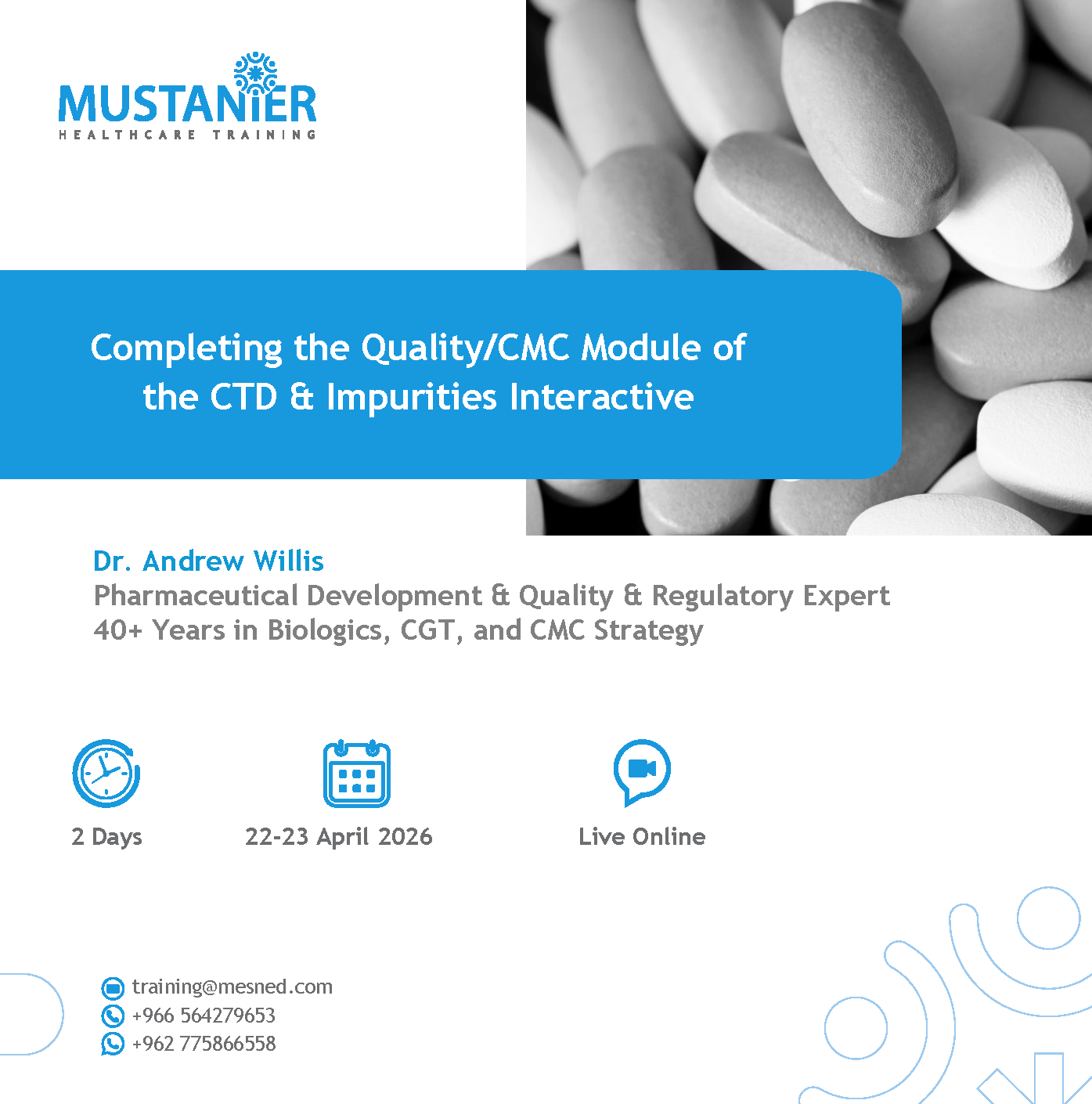
Dr. Andrew Willis is a pharmaceutical development, quality, and regulatory expert with 40 years of experience in oncology and CNS therapeutic areas, with particular expertise in peptide- and cell/gene-based therapies. He has held senior leadership positions including Chief Development and Regulatory Officer at LIfT Biosciences, Chief Technical Officer / SVP for Quality, Regulatory and CMC at IO Biotech, and Subject Matter Expert at Prothena Biosciences. In these roles, he has led global development programs for advanced biological and biotechnological products, overseeing CMC, regulatory strategy, and quality assurance.
Dr. Andrew has extensive experience with EU and US regulatory frameworks, including NDA, BLA, ANDA, MAA, IND, and IMPD procedures, as well as orphan drug applications and scientific advice meetings. His career achievements include obtaining FDA Breakthrough Therapy designation, supporting simultaneous approvals in the US and Europe, and guiding ATMPs, biosimilars, and novel biologics through late-stage development and registration.
His expertise spans product lifecycle management, regulatory strategy for generics and novel entities, and bioequivalence approaches for oral dosage forms, areas directly aligned with ICH Q12 and ICH M13A. In addition, he continuous to pharmaceutical professionals worldwide and Regulatory Agencies on regulatory and CMC topics, with a strong focus on enabling efficient development, approval, and life cycle management of medicines.
Tailored Course Agenda:
Day 1
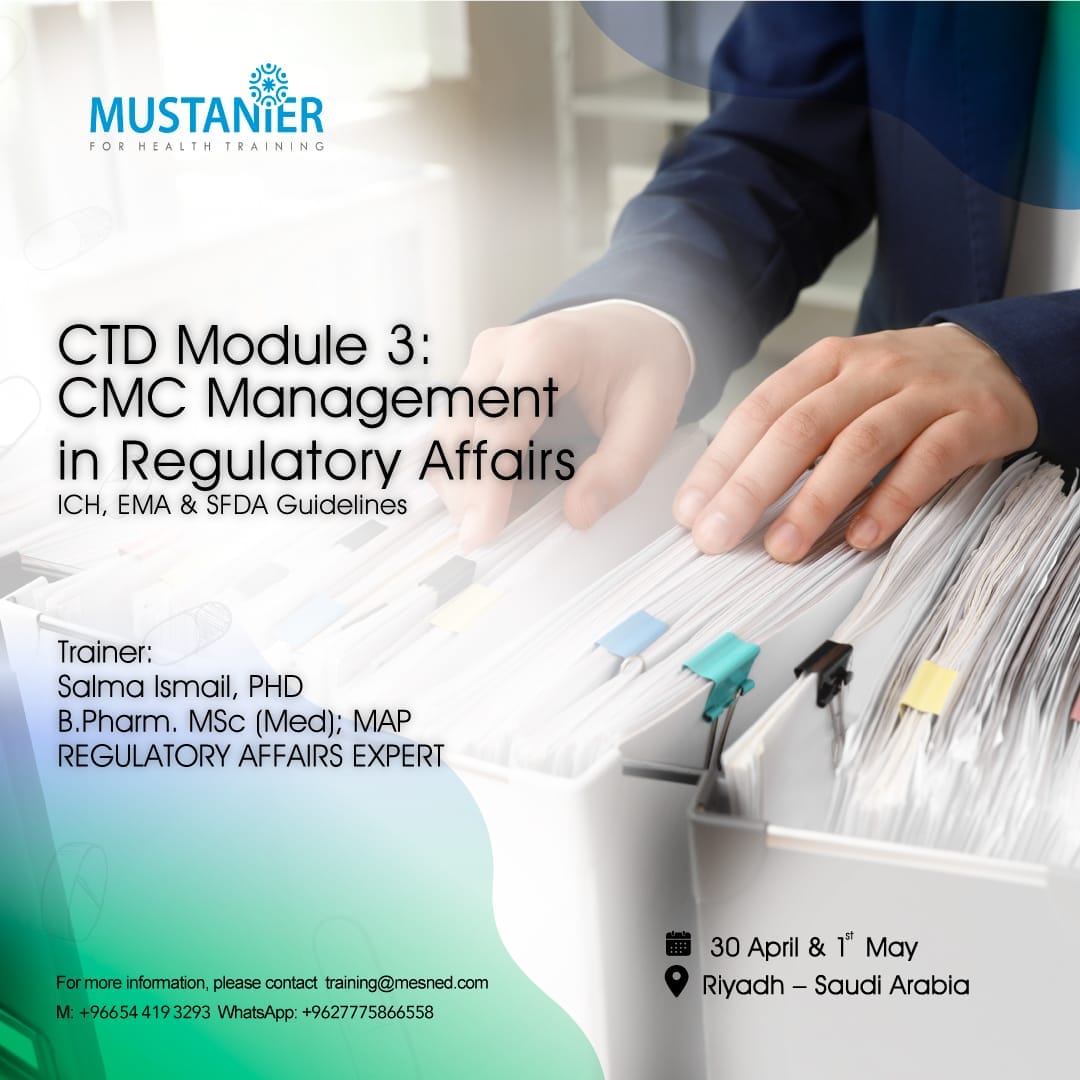
Session 1: Introduction to CTD & CMC for MENA & SFDA Submissions
• Course introduction and regional regulatory landscape
• Overview of CTD structure and the role of Module 3
• SFDA regulatory framework and key guidance documents
• Differences between SFDA, FDA, and EMA expectations
Session 2: Drug Substance Sections & Impurities Overview
• Review of CTD sections S.1 to S.7 for drug substance
• Impurities in drug substance: ICH Q3A, Q3B, Q3C, and SFDA adaptations
• Setting specification limits for impurities
• Drug Master Files (DMFs) and ASMFs in SFDA submissions
• SFDA-specific requirements for APIs and excipients
Session 3: Pharmaceutical Development & Critical Quality Attributes
• Development of pharmaceutics in Module 3
• Critical Quality Attributes (CQAs) and Critical Process Parameters (CPPs)
• Impurity assessment during development
• Process Analytical Technology (PAT) and its role in impurity control
Exercise: Impurity Profiling Case Study
• Group exercise on identifying, classifying, and justifying impurities in a drug substance
• Reference to SFDA and ICH guidelines
Day 2
Session 4: Drug Product Sections & Control of Impurities
• Deep dive into 3.2.P sections (P.1 to P.8)
• P.5: Control of Drug Product – with emphasis on impurity specifications and analytical validation
• Impurities in drug product: degradation products, excipient-related impurities, and leachables
• SFDA expectations for stability data and impurity trending
Session 5: Quality Overall Summary & Reviewer’s Perspective
• How to compile a clear and compliant QOS
• Addressing impurities in the QOS – justification and risk assessment
• SFDA reviewer expectations and common deficiencies
• Bridging studies and regional requirements
Session 6: Change Control & GCC/MENA Roll-Out
• Managing changes in the CMC dossier post-approval
• SFDA change notification and variation guidelines
• Preparing dossiers for GCC Centralized Registration and other MENA markets
• Building local regulatory strategies and submission teams
Exercise: Dossier Update Scenario
• Practical exercise on implementing a change related to impurity limits
• Aligning with SFDA and GCC requirements




المراجعات
لا توجد مراجعات بعد.